 Call Us : 08045476911Call Us : 08045476911
 Send Inquiry
Bridge Mounting GI Octagonal Pole
Price 8500 INR/ Unit
MOQ : 100 Units
Bridge Mounting GI Octagonal Pole Specification
- Mounting Type
- Base Plate (Bridge Mounting)
- Usage & Applications
- Bridge Mounting, Roadways, Street Lighting, Highway Illumination
- Features
- Corrosion resistant, Durable, High strength, Low maintenance
- Weight
- Varies with height/thickness; approx. 35-65 kg
- Pole Type
- Octagonal
- Thickness
- 3 to 5 mm (customizable as per design)
- Surface Finish
- Hot Dip Galvanized
- Product Type
- Bridge Mounting Pole
- Material
- Stainless Steel
- Rated Power
- Custom as per design/application
- Length
- Typically 6 to 12 meters (customizable)
- Voltage
- 220-240 V (Lighting circuit)
- Lighting
- Electrical
- Input Voltage
- 110-270 V AC
- Working Temperature
- -10C to 50C
- Rated Current
- Up to 10A (lighting circuit dependent)
- Socket
- Yes
- Color
- Silver (Galvanized)
- Height
- 6 to 12 meters (custom as per requirement)
- Accessories
- Provision for luminaire, bracket, and junction box
- Installation
- On-site, easy to assemble
- Bottom Diameter
- 130-170 mm (customized)
- Protection Level
- Hot-dip galvanization, min 80 micron coating
- Applicable Standards
- IS 2062, IS 2629, IS 4759 among others
- Base Plate Dimensions
- Custom as per project, commonly 220 x 220 mm or 300 x 300 mm
- Wind Resistance
- Designed for wind speeds up to 180 km/h
- Top Diameter
- 70-90 mm (customized)
- Welding
- Automatic Submerged Arc Welding (SAW)
- Shape
- Octagonal cross-section
- Packing
- Loose or bundled packing as required
- Anchor Bolt Holes
- Pre-drilled, standard diameter: 18-22 mm
Bridge Mounting GI Octagonal Pole Trade Information
- Minimum Order Quantity
- 100 Units
- Supply Ability
- 5000 Units Per Month
- Delivery Time
- 10 Days
- Main Domestic Market
- All India
About Bridge Mounting GI Octagonal Pole
Our business is renowned for processing several superior quality bridge mounting GI octagonal pole in a range of sizes, shapes, and finishes. The commercial, industrial, and private residential sectors are where one can most frequently find it. Our offering offers secure illumination. In addition to this, depending on the needs of the customer, the outreach arm can be placed either singly or doubly on the range of street lighting poles. Bridge mounting GI octagonal pole because it is nine or ten times more efficient than traditional lights. The lower the light, the brighter the illumination in that area. It is sturdy in build, highly reliable, and simple to install.
Designed for Harsh Urban and Highway Environments
These GI octagonal poles are engineered to offer exceptional stability and resistance against wind speeds of up to 180 km/h. Hot-dip galvanization with a minimum 80-micron layer safeguards the pole from harsh weather and corrosion, ensuring longevity even in coastal or polluted environments. This makes them an ideal choice for bridge mounting and critical road infrastructure.
Flexible Configurations Tailored to Project Needs
With customizable options in dimensions, height, thickness, and rated electrical power, the poles can be tailored to meet specific project requirements. The pre-drilled anchor bolt holes and adjustable base plates simplify alignment and installation, while the provision for add-ons like luminaires and junction boxes allows for further adaptability.
Compliant and Safe for Public Installations
Manufactured in compliance with standards such as IS 2062, IS 2629, and IS 4759, these poles undergo rigorous quality checks. Automated submerged arc welding ensures consistent strength, and loose or bundled packing meets diverse logistical needs. Intended for use in bridges, roadways, and highways, these poles guarantee safety and reliable illumination in public spaces.
FAQ's of Bridge Mounting GI Octagonal Pole:
Q: How are the GI Octagonal Poles installed on site?
A: The poles are designed for easy, on-site installation using a base plate mounting system. The pre-drilled anchor bolt holes align with bridge structures, and all necessary hardware is provided. Installation typically involves aligning the pole, securing it with bolts, and conducting electrical connections for lighting.Q: What customization options are available for the pole dimensions and features?
A: Pole height (6-12 meters), base plate size, top and bottom diameters, thickness, and rated power can all be tailored to project requirements. Electrical specifications such as voltage, current, and provisions for accessories like luminaires and junction boxes are also customizable.Q: When should hot-dip galvanized steel poles be used instead of other materials?
A: Hot-dip galvanized steel poles are recommended for environments that demand high corrosion resistance, structural durability, and minimal maintenance, such as bridges, highways, and urban roadways. They are ideal where long-term performance and exposure to varying weather conditions are factors.Q: Where are these octagonal poles typically used?
A: These poles are primarily used for bridge mounting, street lighting, roadway illumination, and highway lighting projects. Their robust design and corrosion resistance make them suitable for both urban and rural infrastructure settings across India.Q: What manufacturing processes are involved in producing these poles?
A: The poles are fabricated from stainless steel using automatic submerged arc welding (SAW) to ensure high structural strength. After shaping into an octagonal cross-section, they undergo hot-dip galvanization with at least 80-micron coating to maximize protection against rust and corrosion.Q: How does the product benefit large infrastructure projects?
A: The poles' customizable options, high wind resistance, and durable hot-dip galvanized finish make them a reliable and low-maintenance choice that reduces long-term operational costs. Compliance with Indian standards ensures safety and ease of integration into large-scale infrastructure projects.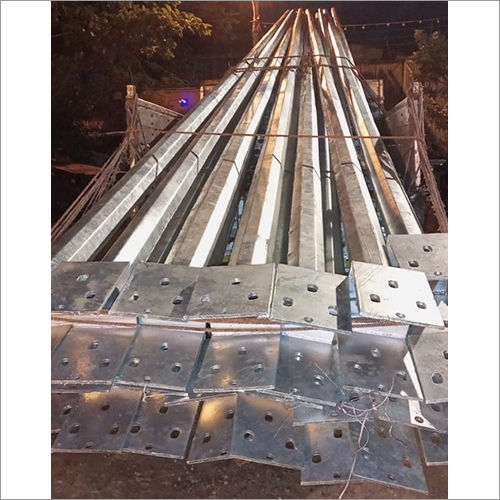
Tell us about your requirement

Price:
Quantity
Select Unit
- 50
- 100
- 200
- 250
- 500
- 1000+
Additional detail
Mobile number
Email

More Products in Octagonal Pole Category
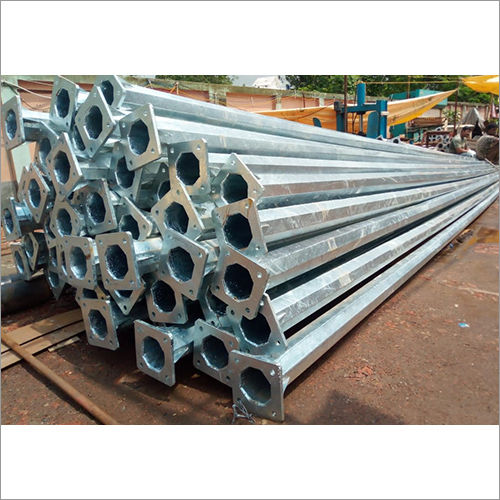
Steel Tubular Pole
Price 10500 INR / Unit
Minimum Order Quantity : 100 Units
Features : High structural strength, corrosion resistant, maintenancefree, long service life
Mounting Type : Base plate/flange mounted
Usage & Applications : Street Lighting, Highway Illumination, Power Transmission, Industrial & Commercial Areas
Lighting : Electrical
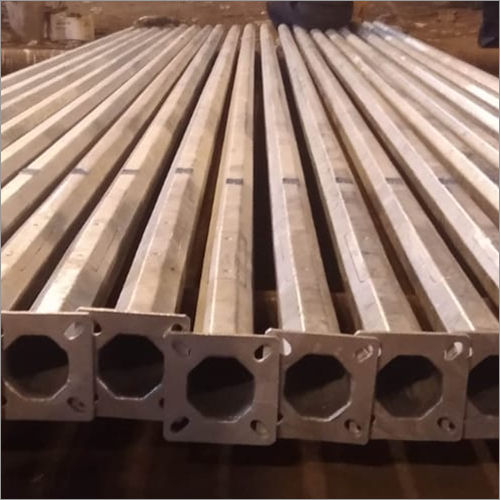
Galvanized Iron Octagonal Pole
Price 10500 INR / Unit
Minimum Order Quantity : 100 Units
Features : Corrosion Resistant, High Strength, Maintenance Free, Robust Structure
Mounting Type : Ground Mounted with Base Plate
Usage & Applications : Outdoor Lighting, Street Lighting, Parking Areas, Public Spaces, Highways
Lighting : Electrical

Address
LOKNATH ENGINEERING
- B No. 1, Debirpara, Jagadishpur,Howrah - 711114, West Bengal, India
- Phone :08045476911
- Send Inquiry
 Send Inquiry
 Send Inquiry
 Send SMS
 |
LOKNATH ENGINEERING
All Rights Reserved.(Terms of Use) Developed and Managed by Infocom Network Private Limited. |
